Interview with Arthur Munoz : Gameplay Animator , Combat & Creatures

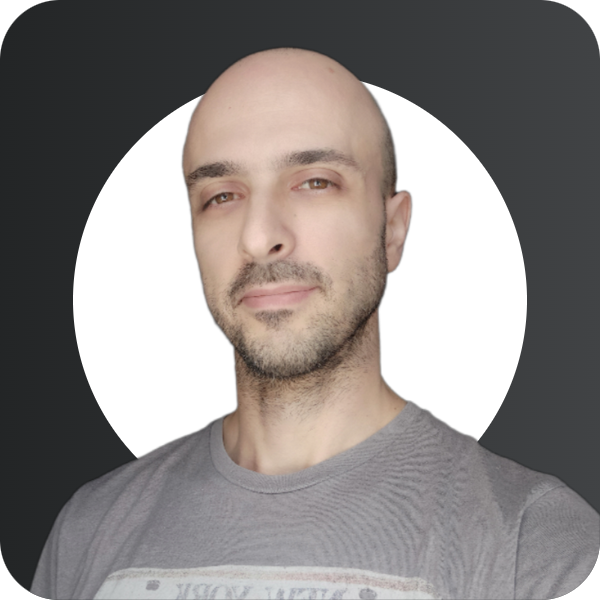
Arthur Munoz, 15 years of experience in gameplay animation, including 12 years at Spiders Games.
Currently freelancing at Moon Studio on No Rest for the Wicked, Arthur has built his expertise in combat and creature animation, two technically demanding fields where every frame counts.
In this interview Arthur shares his vision of gameplay animation: how to transform constraints into creativity, collaborate effectively with game designers, and build a freelance career in the video game industry.

Tell us about your journey as a gameplay animator: your beginnings, the moments that shaped your evolution

I've been an animator for about fifteen years and I've had the chance to go through very diverse experiences that have shaped me both technically and artistically.
I started at Spiders Games, where I spent 12 years working on several titles like Greedfall and Steelrising.
This long period gave me real strength in the production pipeline, but also a culture of versatility, because in a structure like Spiders, you have to know how to touch everything: rigging, cinematics, gameplay...
I learned a lot there about communication between departments and the importance of understanding everyone's constraints to effectively move a project forward.
Then, I chose to go freelance. This shift opened me up to international collaborations, notably with Lightspeed Studio on The Last Sentinel, through Superseed Studio.
I also worked on very different productions like Prince of Persia: The Lost Crown, Wayfinder, and The Last Faith.
Today, I'm full-time with Moon Studio on No Rest for the Wicked.
On the side, I sometimes have occasional collaborations with other studios, like Tarsier Studio on Reanimal or Motion Twin with Windblown.

How do you manage to stay creative while respecting the numerous technical constraints of gameplay?
For me, creativity comes precisely from these constraints.
When you know that the animation must remain readable, reactive, and above all pleasant in hand, you're forced to find inventive solutions.
Rather than seeing technique as a brake, I see it as a framework that sharpens my creativity.
I like to work through rapid iterations: set a clear intention in blocking, test in-game as soon as possible, and then enrich everything while respecting the timing imposed by gameplay.
It's a constant balance between the "style" you'd like to push and the functionality the player expects.
Beyond that, I think it's important to always stay inspired by other works, whether other games, films, or even comics in my case.
It feeds my imagination, helps me vary references, and avoids going in circles by staying locked only in the project's universe.
How does collaboration with game designers work in your team? Who decides what?
It's a permanent collaboration, and for me, it's one of the most stimulating aspects of the job.
The game designer defines the mechanical needs: speed, range, action windows, cancel, etc.
My role is to bring these mechanics to life in a readable and satisfying way.
Ideally, it's a dialogue: sometimes, animation brings gameplay ideas they hadn't considered, sometimes design forces us to simplify a movement for reactivity reasons.
At Moon Studio for example, there are many constant back-and-forths between animation and design.
I don't think there's a fixed "who decides." It's really a two-voice construction, with the player at the center.
How do you manage animations that must work on multiple characters/different rigs?
The first step is to think about the pipeline so that rigs can already share animations.
Just that alone is a huge gain: if proportions and animation direction aren't too far apart, you can easily transfer and avoid a lot of manual rework.
Then, I find it very useful to plan for a common animation bank.
It allows game designers to pick from it and immediately have temporary animations to test prototypes.
We save time, and we can quickly validate a gameplay idea without waiting for a specific finalized animation.
Of course, there are always cases where you have to readapt or manually retouch to fit the character perfectly, but setting up this technical and organizational base really changes things.
You mention having a passion for combat and creature animation. What specifically attracts you to these areas?
Combat is often at the center of game mechanics.
I like to think of it as subtle choreography, almost like a dance: each movement, each intention must be readable and tell what's hidden behind these gestures—the struggle the characters are waging, through their emotions and their lived experiences.
It's about describing action with beauty and meaning, while remaining faithful to gameplay requirements and lore.
I'm also a big fan of "fighting" in general: having grown up in the 90s, all the culture of manga like Dragon Ball, Spider-Man comics, and action films of that era forged a culture anchored in my imagination, which enormously influences my approach to combat animation.
As for creatures, they allow me to break out of human patterns and explore unprecedented gestures.
I love imagining how a creature breathes, attacks, moves.
The technical challenge is to keep these movements credible and readable, while being spectacular.
It requires real research: zoology, biomechanics, but also exaggeration to fit video games.
And then there's all this epic imagery I love: creating incredible panoramas opposing monsters against heroes, generating real adversity, and plunging the player into a memorable adventure.
How do you experience your freelance status in the video game industry? What are the advantages and challenges of this work mode for a gameplay animator?
Freelancing is both incredible freedom and constant discipline.
The main advantage is that I can choose my projects, which is an enormous luxury after several years of career.
I can alternate between more artistic projects, long-term collaborations, and short but enriching experiences.
The challenge is self-management: knowing how to say no, maintaining a realistic workload, and handling paperwork.
And then you have to stay visible and connected in the industry, because networking is essential.
But overall, this status gives me a work-life balance that I didn't have in-studio.
Working from home offers me great flexibility for my family life, which is precious to me today.
Finally, can you share advice, a technique, or an approach you would specifically recommend to gameplay animators? Something you wish you had known earlier in your career or an important lesson you learned.
Always draw inspiration from other artists. Observe what's being done elsewhere to feed your creativity.
Stay motivated and try to understand their way of working. Understanding others' workflow can teach you a lot.
Constantly develop new skills around your profession. For an animator, this can be acting, martial arts, dance, anatomy, rigging, modeling, etc.
Always find references before starting. Do your research and look at what others have done to enrich your ideas.
Always work through iterations. From macro to micro, from global vision down to details.
Collaborate with your team. Share, communicate, and learn from them.
Plan your work. Develop your workflow and adopt it.
Learn from your mistakes. Each failure is a lesson to progress.
Keep a journal of your work to track your decisions and experiments.
Maintain a good work-life balance and have fun!
Three takeaways from this interview:
Creativity is born from constraints. Arthur doesn't see technical limitations as obstacles, but as a framework that guides his creativity.
Permanent dialogue with game design is essential. Gameplay animation isn't done in a silo—it's a two-voice construction with the player at the center.
Freelancing offers freedom, but requires discipline. Work-life balance, rigorous management, and a solid network are the keys.
Thank you to Arthur for this rich and generous interview!
Find Arthur Munoz: LinkedIn : https://www.linkedin.com/in/arthur-munoz/ Instagram : https://www.instagram.com/arthurmunozanimation/
Which part of the interview inspired you most?
PS: I'm developing AniMatch, a platform to connect animators and studios.
Currently in beta
Join the first testers: AniMatch.


Comments