

Interview Rodrigo Escobar: An Unconventional Journey into Gameplay Animation

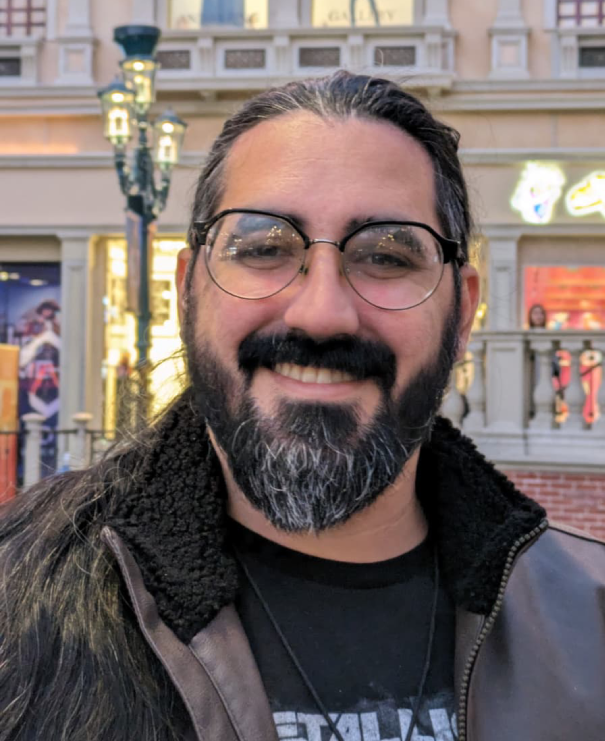
To open the year, AniMotion welcomes an animator whose journey commands admiration.
Rodrigo Escobar didn’t follow the “traditional” path into the games industry , far from it.
With almost no access to resources, in an environment where the industry felt out of reach, and driven by a determination that never faded, he built his career through passion, curiosity, and a rare kind of resilience.
Between that unlikely starting point and his current role as a gameplay animator lies a path shaped by constraints turned into strengths, by doors knocked on relentlessly, and by a tenacity forged in isolation.
A journey that, on its own, already says something essential about this craft.
His perspective on animation is humble, clear‑eyed, and deeply inspiring. But above all, Rodrigo’s story shows how a career can be built even when the odds seem stacked against you , and how passion, curiosity, and perseverance can open doors you once thought impossible.

To begin, could you walk us through your journey and explain how you became a gameplay animator?
My first background was teaching martial arts, I did that until my daughter was born.
Back then I needed to make a change mostly for financial reasons, but I also got injured at the time.
I was very passionate about my career, and it only made sense for me to change to something else that also made me feel that passion, and that was games.
I have been a gamer all my life, and I used to daydream about making games a lot. I already knew I wanted to work on the animation part; games like Prince of Persia or Uncharted were an obsession for me.
I remember playing Uncharted 2 and thinking maybe in a different life I could work making movement like this.
The thing is, I was living in Cuba at the time, that was the main reason why that was a far dream for me. Access to the Internet was nonexistent, and getting knowledge about anything was incredibly difficult. Access to technology or software was also a huge limitation.
I started anyway, but it took me a very long time. I couldn't just download a rig online and start animating. I started from the bottom, learning all 3D‑related stuff with the very limited (and outdated) info I could scrape here and there, but that allowed me to get a job doing rigging pretty quickly at the main animation studio in Cuba.
Being surrounded by animators made it a lot easier to transition into animation; I mostly did TV shows at that time.
And shortly after that, the Internet started to become available for everyone little by little.
It's very difficult to explain how big the isolation in Cuba was, and looking back it was very funny how unaware I was of what was happening in the rest of the world.
Working with Cuban TV animators, I felt like the weird guy who was obsessed with the videogame industry. I used to think I was the only animator that cared about games, until I found the GDC animation talks , those talks changed my life.
Around 2020, the Internet was functional enough that I could do the basic stuff, like make video calls, download small files, post my work, look for tutorials, etc.
I discovered Unreal around that time, and when I saw how Blueprints worked, I jumped out of Unity and never looked back again.
At this time, I already knew all the basics of animation but needed to make the jump into gameplay and the world in general.
" I knocked on every door I saw, I reached out to every animator that gave a talk or shared something on social media. I jumped into the opportunity whenever any animator offered a free review of my reel. I have met a lot of amazing people that helped me a lot."
I kept improving my craft and sharing my work.
I slowly started getting commission requests, mostly from solo or small indie teams. I slowly started sharing only gameplay animation work and only took game animation commissions.
Until I landed my current position at an indie studio where I get to put all the stuff I learned into work.
I'm still far from learning all I want to know, but I'm very passionate about my work and about what people in the industry are doing.
And well, I managed to get out of Cuba, so now the possibilities are infinite
What’s your favorite animation software, and why? Do you use any essential plugins or scripts in your workflow?
Favorite software for animation is Maya. I have used a lot of them.
For a while I had to change between software for different productions. I ended up using 3ds Max, Cinema 4D, Blender, and even Moho for 2D.
At the end of the day, they all work similarly, and for animation it's more or less the same workflow. I stayed with Maya because it's the one where I learned all the other processes of 3D, like rigging.
Rigging is something that, even when I tried to avoid doing it, kept coming back to open doors, and it has been a very helpful skill.
So I prefer to work with Maya because I've come to know it pretty well.
But if you are new to this, go with Blender, haha.
Because you are going to have a way easier time finding solutions and tutorials , there's much more information out there.
Plugins I like: Advanced Skeleton, Studio Library, and animBot. Of those three, animBot unfortunately is a bit difficult to get if you are in a third‑world country with no Internet.
Back in the day I was dying to use it, but I didn't have access to it. It's actually amazing to work with. But I also worked for a long time without it, so it's more of a commodity.
Which game engine do you prefer, and what differences do you notice in your work as an animator?
For game engine I prefer Unreal.
I started with Unity but had a lot of trouble implementing code.
Blueprints in Unreal really made the difference for me.
And after a couple of years using Unreal, I went back to Unity for a commission work thinking I was going to remember, and I realized how much Unreal makes my life easier. I was taking it for granted.
From the animation previews to how the assets are handled when imported, even retargeting in Unreal right now is so easy.
But the most important factor is the Blueprints , the freedom of being able to set up your own stuff without code, that's amazing.
Do you handle the animation integration yourself (Blueprints, State Machines, etc.), or do you work with a programmer?
Depending on the project, sometimes I handle the animation integration, sometimes a programmer does it, and sometimes we work together and it's a little bit of both.
I prefer to handle the animation integration, but in my experience doing that for small commissions is too much work.
In my full‑time job, however, I do prefer to do it myself.
How much I handle depends on the situation. If it's a new mechanic that has a lot of connections to other parts of gameplay implementation, I work with a programmer to build the system.
But I like being the one getting it in, testing, tweaking the blend times, and placing the notifies.
" How the animation looks in Maya and how it looks and feels in gameplay is often very different.
So I have built into my workflow the habit of getting the animations into the engine as soon as possible and doing fast iterations on them. I work better that way."
Do you work more with mocap or keyframe, and what drives that preference?
I work mostly with keyframe.
I think mocap is a very useful tool, and it has its uses.
For example, if I had to animate a dialogue scene with a very specific distribution in the scene, I think having mocap would make that task way easier.
But for action and gameplay, I prefer to have full control.
Probably the part I enjoy the most is the first blocking stages of an idea, and at least in my experience I'm not even included in that part of the process for mocap workflows.
I know that this is not always the case ( I have seen amazing animators recording their own mocap ) but I’d rather do it by hand.
When I look into the future and my hopes of how I'm going to improve as a developer, I always see myself moving towards more and more stylized work. Games like No Rest for the Wicked or Kemuri are such an inspiration.
So yeah, my hopes are to keep pushing in that direction, breaking bones and taking poses to the extreme.
At what stage of development do you usually get involved? From the early phases, or once the mechanics are already defined?
I think I'm a bit spoiled in my team right now, so this is probably not everyone's experience. I come in very early in the planning.
We are a very small team, so when planning it's good to have the animator there assessing how big the scope is getting and if we can handle it.
This also means I get to do a lot of stuff, like integration, cloth, and ragdolls. I even got a bit into VFX recently.
And I love it that way, I love making games. I like to be there in engine fixing stuff and testing, and I also love to plan mechanics and figure out solutions.
How does collaboration with the game designers work within your team?
Like I said, I'm very spoiled. I often get to pitch ideas and even make technical requests for mechanics that I want and consider will make the game look good.
And sometimes I get handed a puzzle of conditions and limitations, but that often drives my inspiration even more.
The crazier the idea, the more exciting it is to try to translate it into gameplay.
I get a lot of freedom on the visual part, so I can put my own twist on it.
In my opinion, the best experiences I've had are when I ended up creating something that I would never have done by myself.
You can only achieve this if everyone is open to listen and collaborate. I have the luck to work with pretty amazing people.
So sometimes I get handed a design, sometimes I pitch an idea and that gets design aspects, and sometimes this goes back and forth several times.
You learned animation in a context where access to resources was very limited. What did that constraint develop in you, and what do you now consider a strength in your work?
Haha this is going to be difficult for me. I think I could say I developed a lot of resilience.
Doing games is not always easy. Any art production is challenging, and delivery dates are always stressful.
Movies, TV shows, games, etc., they always hit that point when you need to finish and everything gets super stressful.
I think I manage that pressure pretty well because of my limited background. I even lock in more and focus better.
Don't get me wrong, I burn out like any human. It's just that my upbringing on a poor island has given me the perspective that I'm a very privileged and lucky person just to make my living doing games and working at what I love.
You often talk about a “voice” in gameplay animation. How do you actually manage to preserve that personal voice within a production pipeline that can be very standardized?
Get inspired by stuff you like outside animation : martial arts, animals, playing guitar, drawing, movies, books...
Bring that into your work, integrate that vision into your animation, and show it to the world.
Sooner or later you will get a job to do that exact thing, and your voice is going to be there.
" It's the classic “if you want to get a job doing X, practice and show that X.”
I did that for my reel , little by little I replaced every animation until I only had animations running in engine, and now I'm called to do that.
Do the same but with your voice: put it out there, someone will listen. "
To conclude, what advice or insight would you like to share with beginner gameplay animators? Something you wish you had known earlier, or a lesson that has shaped the way you work?
I was recently reached out to by another animator asking if I had any tips for their first animation takedown.
I'm not an expert, but I tried to help , all my other stuff is online.
For finding references for a takedown, I would say YouTube.
Haha, it's really basic, but depending on the style the client is going for, you can just look for finishers and takedowns from similar games and try to match the timing or the poses , whatever you find useful.
You just type “Assassin’s Creed Valhalla executions/finishers,” and you would be surprised by how many channels are dedicated to recording animations specifically.
Use this as your base so you know you’re in a good place mechanically. If your client already has a strong idea of what they want, sometimes that makes it easier.
When trying to find which direction to go, limitations are your friends: see if the client wants an arm chopped off, or if the character has a special weapon, martial arts style, gameplay environment restrictions, etc.
On the technical side, remember that in most cases you will need to export the enemy in the same world position as the player.
So make your life easier: whatever rotation or position offset you need on the enemy, do it on a layer, so at the end you can just disable the layer and export.
Check with the programmer if they have a system for paired animations, and if by design you have constraints on the offset distance being a determined length.
And even if they don’t, keep those offset numbers in mind because they’re going to need them to make the two characters match in‑game.
And lastly, keep your worst‑case scenario in mind.
For example, if you can execute from 4 meters away but also from 0.5 meters, look for the animation that is going to look better when pushed to the other extreme.
It’s better to have an animation that covers the 4m than one that is in place and starts sliding from across the room.
This could happen to you with all types of things , like the player having multiple weapons and different starting idles, but the execution is empty‑handed or with a knife, etc.
Try to find those scenarios and talk to the client about which solution would be best for them.
Sometimes you may even need several animations, or to section the animation and have different entry points.
This conversation highlights a journey shaped by resourcefulness, curiosity, and a genuine passion for gameplay animation.
Whether it’s rigging, integration, stylization, or collaborating with game design, his approach is a reminder that gameplay animation isn’t just about technique , it’s a way of thinking about the game, feeling the movement, and constantly searching for how to bring an intention to life.
His story also shows that a personal “voice” can’t be declared; it’s something you build. It grows from outside influences, constraints, trials, errors, and above all, the desire to share something unique.
Thank you, Rodrigo, for opening this window into your way of working.
It’s a valuable source of inspiration for anyone trying to find their place , and their voice , in gameplay animation !
To explore Rodrigo’s work in more depth:
Linked In : https://www.linkedin.com/in/rodrigo-escobar-04413a191
Viméo : https://vimeo.com/1130354916?fl=pl&fe=sh


Comments